


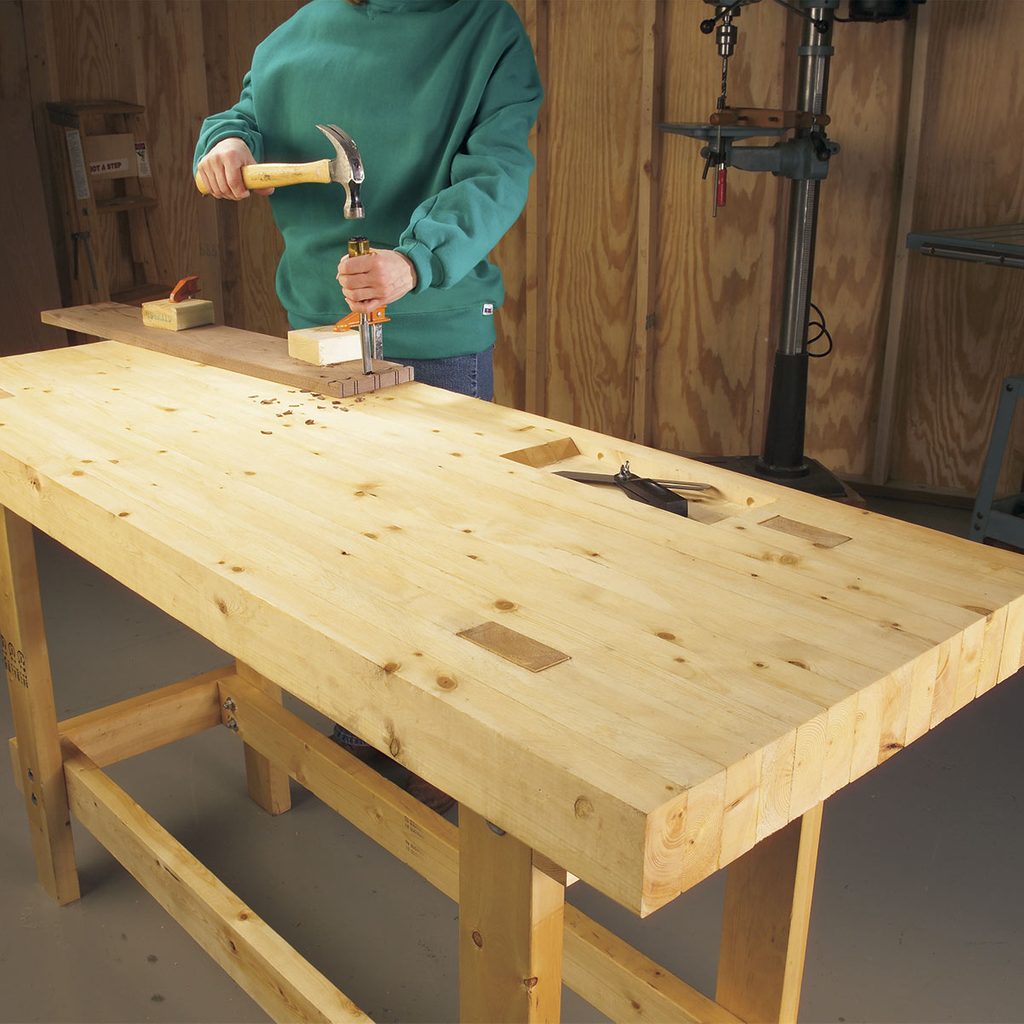
Alright, you want to build a work table for your workshop, huh? You've come to the right place. You know, a good work table is the backbone of any workshop. It's where you'll spend countless hours working on your projects, so you want to make sure it's sturdy, well-built, and just right for your needs.
Let's start with the basics. What kind of work table are you thinking about? Something heavy-duty for woodworking? A smaller, more mobile table for electronics or crafts? Whatever you decide, the fundamental principles are the same. We're talking about building a strong, reliable surface to work on, and that's what we're gonna do!
Gather Your Tools and Materials
First things first, let's get your gear together. You'll need:
Lumber: This is the backbone of your table. You'll want to choose lumber that's strong and stable. For the top, you'll want to use hardwood like maple, oak, or cherry. For the frame and legs, you can use pine, fir, or even a combination. You'll need some 2x4s for the frame, and 2x12s for the top (or 2x10s if you're feeling economical).
Fasteners: You'll need screws, nails, and possibly wood glue. I personally like using pocket hole screws for assembling the frame, but regular wood screws work great too.
Measuring Tape and Pencil: You'll need to be precise with your measurements, so a good tape measure and a pencil are essential.
Circular Saw: You'll use this to cut the lumber to size. A miter saw would also come in handy, but a circular saw can do the job.
Drill and Drill Bits: You'll need a drill to create pilot holes for your screws.
Clamps: Clamps are essential for holding your pieces together while you're assembling the table.
Safety Glasses and Hearing Protection: Safety first, folks! Protect your eyes and ears while you're working.
Planning Your Table
Now, it's time to get creative. You need to figure out the size of your table. Consider the projects you'll be working on and the space you have available. A standard workbench is typically around 24 inches deep and 60 inches long.
Think about the height you want. A good rule of thumb is to make it a little lower than a standard countertop, around 30 inches high. You want to be able to comfortably work on your table without straining your back. You can even use an adjustable sawhorse to help you find the perfect height.
Building the Table Frame
Once you've got your measurements sorted, it's time to build the frame.
1. Cut the Frame Pieces: Measure and cut your 2x4s to the size you need for the frame. If you're going for a simple rectangular frame, you'll need four pieces for the sides, and two pieces for the front and back.
2. Assemble the Frame: Lay your frame pieces out on the floor and use screws or nails to connect them. Make sure the corners are square and that the frame is sturdy.
3. Add Braces: To make your table even more robust, you can add diagonal braces across the frame. This will prevent the frame from warping over time.
Building the Table Top
Now, onto the star of the show - the tabletop!
1. Cut the Top Pieces: Measure and cut your 2x12s or 2x10s to the desired size. You'll want to make sure the pieces are cut to a uniform length.
2. Glue and Screw the Top Pieces Together: Lay your top pieces side by side, ensuring they are aligned. Apply wood glue along the edges of the pieces and clamp them together. Then, drive screws through the top into the frame below.
3. Sand and Finish: Once the glue has dried, sand the tabletop to smooth out any rough edges or imperfections. You can then apply a finish, like a varnish, polyurethane, or paint, to protect the table and give it a nice look.
Adding a Touch of Personalization
Hey, you're building your own work table, so make it your own! You could add a shelf underneath for tools and supplies, a drawer or two for smaller items, or even a vice for holding your workpieces securely.
If you're feeling extra adventurous, you can add a power strip to the underside of the table for easy access to electricity. Or, if you're really serious about woodworking, you might want to consider installing a bench dog system for holding your workpieces.
Time for the Big Reveal!
Now that you've built your work table, give it a good look-over. Did you create a masterpiece? I bet you did! You've got a solid, sturdy table that's ready to handle whatever projects you throw at it.
The Pride of Ownership
There's something special about building your own work table. It's not just a piece of furniture; it's a testament to your skills and craftsmanship. And you'll be proud of every project you complete on it, knowing that you built it with your own two hands.
So, what are you waiting for? Get those tools out and start building! You won't regret it. And hey, if you run into any snags along the way, don't hesitate to ask me for help. After all, that's what friends are for! Happy building!
No comments:
Post a Comment
Note: Only a member of this blog may post a comment.